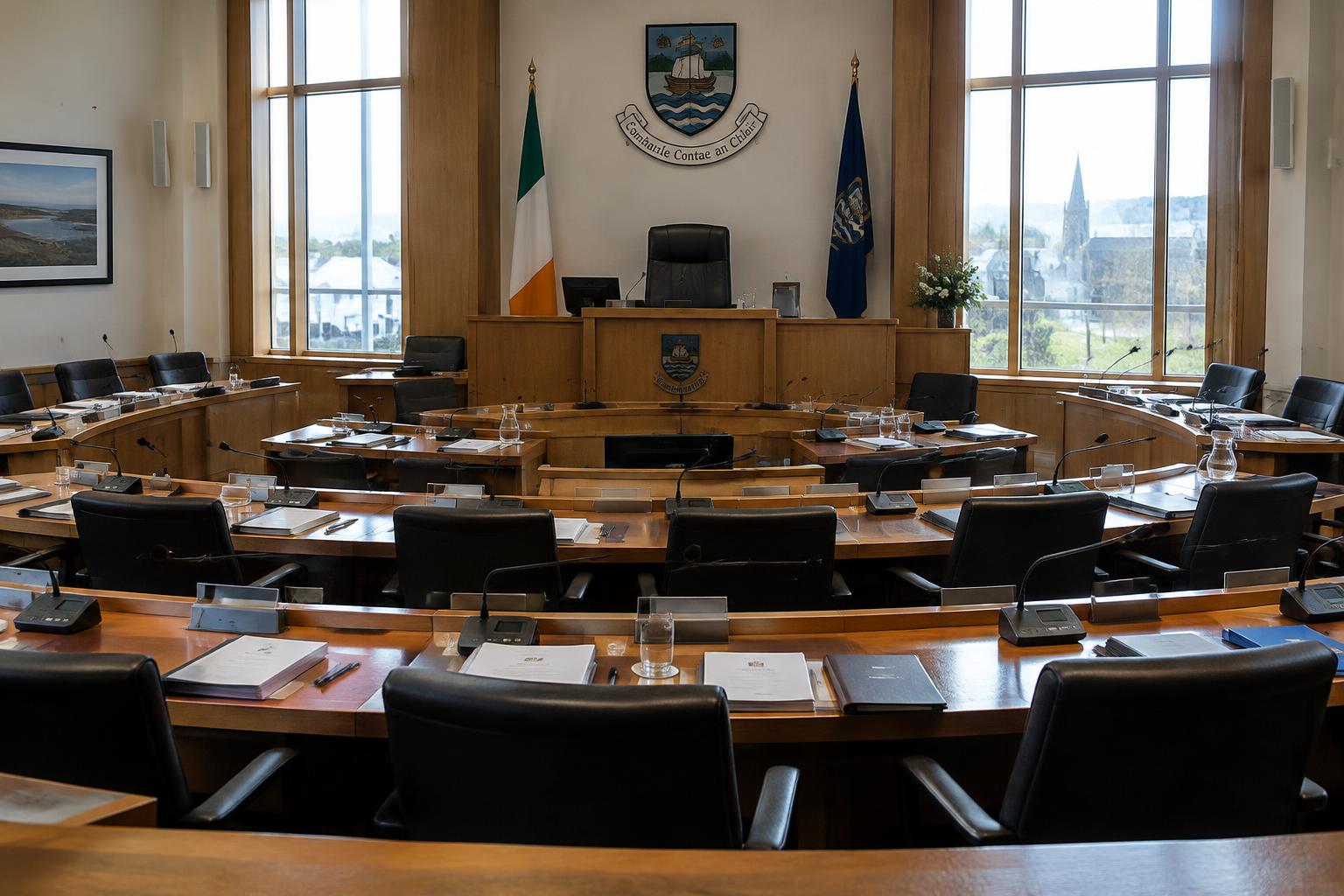
Three months after the Government published what has been described as the most significant programme of local government reform in a generation, Ireland's 31 local authorities are deep in their first budget season under the new dispensation. The early signs are positive — and the accountability structures built into the plan give the reforms every chance of lasting.
What the Plan Contains
On 22 July 2026, Ministers James Browne and John Cummins launched the Local Democracy Taskforce Report and the accompanying Government Implementation Plan, providing a clear roadmap to strengthen local democracy in Ireland. The goals are straightforward: give elected councillors a stronger role in local decision-making, enhance accountability within local authorities, and improve the supports available to the people who represent their communities.
The Implementation Plan translates the recommendations of the Local Democracy Taskforce into a clear programme of action, comprising 79 measures to be delivered over the period 2026–2029. The reforms are designed to support a more responsive, democratic, accountable and empowered system of local government across all 31 local authorities, structured around eight key objectives and delivered through a combination of legislative changes, administrative reforms and sustained collaboration between all partners in the local government sector.
Among the most significant measures are enhanced powers for councillors in the budget preparation process, new structures giving elected members a stronger voice at executive level, expanded reserved functions, and improved access to information from public bodies. The report also recommends practical reforms including statutory response timeframes for councillor representations.
That last point matters more than it might appear. Reserved functions — the decisions only elected councillors can make, from adopting the budget to approving development plans — are the legal expression of local democracy. Expanding them, and backing councillors' day-to-day representation work with statutory response times, shifts real influence towards the people voters actually elect.
The delivery approach is deliberately practical. Rather than waiting for one large piece of legislation, the programme combines legislative changes with administrative reforms that can begin sooner, and it leans on sustained collaboration between all partners in the local government sector — the Department, the councils themselves, and the representative bodies that speak for councillors. That mix gives the programme more than one route to progress, and it means early wins can build confidence while the longer legislative work proceeds.
A Landmark Moment for Local Democracy
The reaction from Ireland's councillor representative bodies has been clear and positive. AILG President Cllr Mary Hanna Hourigan described the publication as "a landmark day for local democracy in Ireland," saying it "represents the most significant programme of local government reform in a generation."
Meath councillors welcomed the extensive new powers and financial autonomy proposed, with Cllr Joe Fox describing the proposals as "a game changer for local government," adding that "councillors will have more powers and the executive will be more accountable to us — we will be involved in the budget process a lot earlier and have direct input."
Implementation is being fast-tracked, with one genuinely positive move being the shift of power back to municipal districts — where, as observers of council meetings note, the real work of a local authority happens. Municipal districts are the tier of local government closest to communities, and strengthening them puts decision-making within sight of the people it affects.
The breadth of the welcome is itself significant. When the representative body for councillors nationwide and individual members on the ground respond in the same positive terms, it suggests the Taskforce listened carefully to the people who work within the system every day. That sense of ownership across the sector is a genuine asset as delivery begins.
An Oversight Structure That Means Business
One of the most promising features of this reform programme is that it comes with real accountability built in. An implementation steering group chaired by the Department of Housing, Local Government and Heritage will oversee the rollout of the reforms and report directly to Minister Cummins and Housing Minister James Browne.
The Implementation Plan translates the recommendations of the Local Democracy Taskforce into a structured and deliverable programme of reform, with a strong focus on practical implementation — described as a key milestone in the ambition to make local government a cornerstone of effective, responsive and accountable public administration.
That structure matters. Previous reform efforts in Irish local government have sometimes lacked the formal oversight mechanisms needed to sustain momentum. This plan has them built in from day one, with a named steering group, a direct reporting line to two Ministers and a defined delivery window running to 2029.
The steering group model also gives the sector a single, identifiable forum where progress can be tracked and obstacles raised early. For councils, that means a clear channel through which practical experience from the ground — what is working in a chamber in Donegal or a municipal district in Kerry — can inform the national rollout. Reform programmes live or die on that kind of feedback loop, and this one has it in writing.
The Budget Season Test
With councils across Ireland currently setting their 2027 budgets, this is the first practical test of the reforms. Councillors are being brought into the process earlier, given better data, and afforded greater input into spending priorities — exactly as the Implementation Plan envisaged.
Councillors are in line to get a stronger role in the operation of local authorities and in budget preparation — and the 2027 budget cycle is where that stronger role begins to take shape in real terms, council by council, across the country.
The timing is helpful. Budget season is when the relationship between elected members and the executive is most visible, and the reforms arriving ahead of it mean councillors can exercise their enhanced role immediately rather than waiting for legislation to bed in. Early involvement in shaping spending priorities is precisely the kind of practical influence the Taskforce had in mind.
There is a wider dividend too. A councillor who helps shape the budget can speak with real authority to residents about why a road is being resurfaced, a library refurbished or a playground prioritised. That connection between representation and visible delivery is what the reforms are ultimately designed to strengthen — and it is being built now, in budget meetings happening in council chambers across the country this autumn.
What It Means for Communities
For the public, the value of these reforms will be measured in responsiveness: representations answered within statutory timeframes, clearer lines of accountability when decisions are made, and councillors with the information and authority to advocate effectively for their areas.
For councillors themselves, the programme promises better supports and a stronger voice at executive level — recognition that the demands on elected members have grown and that the role needs to be properly resourced if local democracy is to thrive. That matters for the future of the institution as well as the present: a well-supported, influential council chamber is a more attractive place for people considering putting their names forward in 2029.
And for the local government sector as a whole, the 2026–2029 delivery window means the reforms are timed to be well established before the 2029 local elections, giving voters a clear picture of the strengthened system when they next choose their representatives.
The Bottom Line
Seventy-nine measures. Three years. Thirty-one councils. The Local Democracy Taskforce Implementation Plan is ambitious — and the early signs are that Government, councillors and the local government sector are moving in the same direction to make it real. The reforms timed to land before the 2029 local elections give communities across Ireland every reason to watch this space.