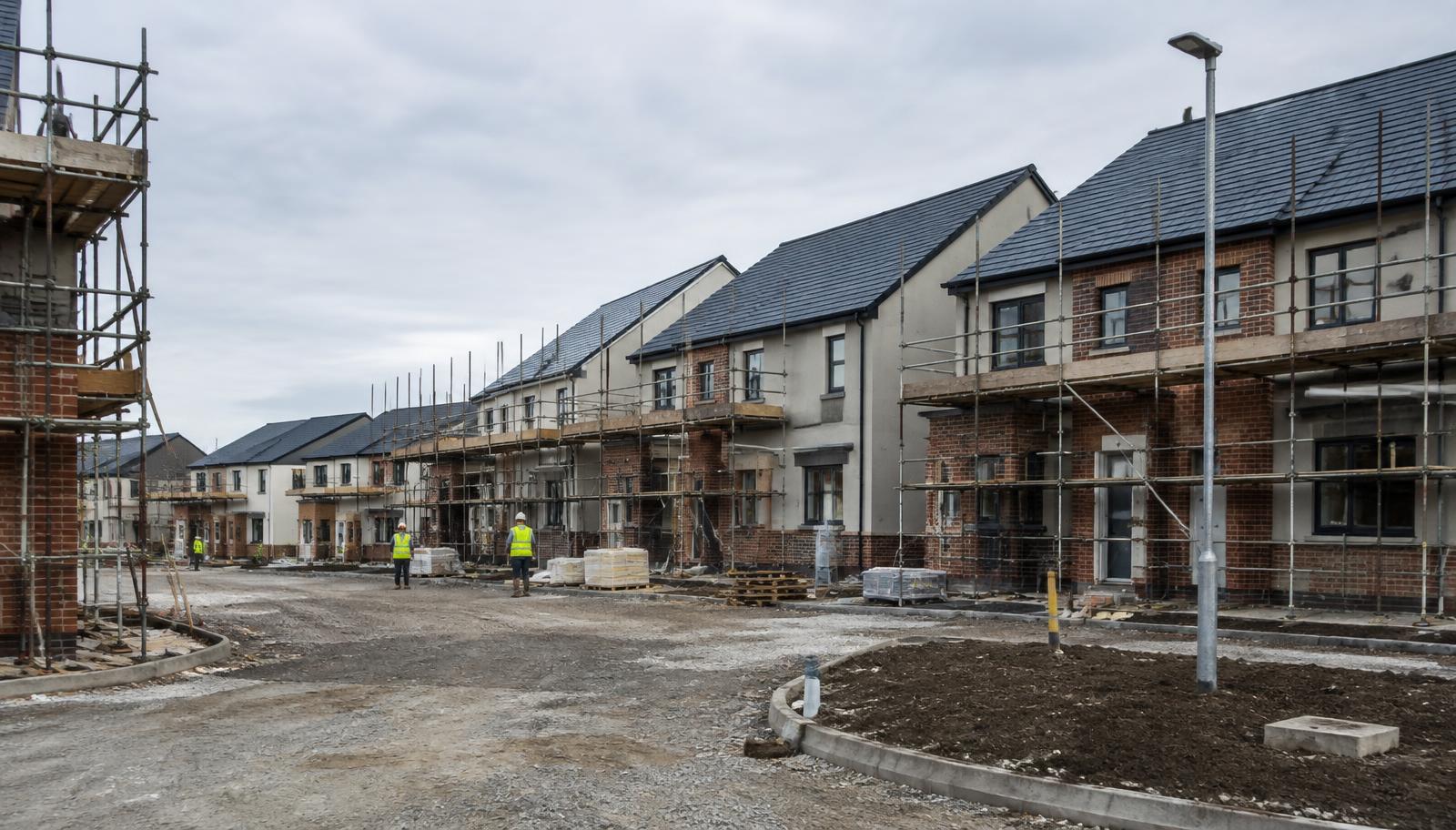
Ireland's councils are being asked to build, not buy. The Government's decision to phase out turnkey acquisitions by the end of 2027 puts planned, needs-led social housing at the heart of national policy — and gives local authorities a bigger role in shaping the homes their communities need.
What the Minister Announced
On 20 October 2026, Minister for Housing, Local Government and Heritage James Browne TD announced that the Government will bring an end to turnkey acquisitions for social housing, placing a much greater emphasis on homes built directly by local authorities and Approved Housing Bodies (AHBs). Cabinet approved the measure the same day, and the Minister confirmed that 31 December 2027 will be the final date for submitting turnkey acquisition funding applications to the Department.
Under the turnkey model, a council or AHB buys homes from a developer after construction has started or finished. It has been a useful tool, but it comes with a limitation: the public body has no say in the original design, specification or mix of homes. It is buying what the market was already building.
The new approach flips that around. Instead of buying finished schemes, councils and AHBs will decide what is needed first — how many homes, what type, what size — and then build or commission them. Minister Browne described the change as one that will "increase the emphasis on planned, needs-led social housing delivery and cease the reliance on the acquisition of homes that would otherwise have been available to the private market."
The decision delivers on a commitment in both the Programme for Government and the national Housing Action Plan, Delivering Homes, Building Communities 2025–2030. It is a clear signal that the State intends to be a builder of homes, not simply a buyer of them.
Why Building Beats Buying
The logic behind the change is simple and compelling. When a council buys a turnkey home, that home was already going to exist — it simply moves from the private market into social housing. Overall supply does not grow. When a council builds a home, or commissions one that would not otherwise have been built, the country gains an extra home.
That matters for everyone. First-time buyers gain, because homes that would have been sold privately stay on the open market rather than being bought by the State. Households on social housing waiting lists gain, because the homes delivered for them will be designed around identified local need from day one. And communities gain, because planned schemes can be shaped with the right mix of family homes, one-bed units and age-friendly housing for each area.
Control over design also brings long-term value. Councils are landlords for decades. Homes they specify themselves can be built to standards that suit long-term management, energy efficiency and accessibility — a sensible investment for the taxpayer and a better home for tenants.
The Department has confirmed that standardised designs will form part of the revised approach. Standard designs help councils move faster through procurement and construction, and they make it easier to build at scale across multiple sites — exactly the kind of predictable pipeline the Minister has said the Government wants to establish.
A Careful, Well-Planned Transition
Importantly, this is not an overnight switch. The Government has built in a transition period that gives councils, AHBs and builders time to adapt. Local authorities and AHBs can continue submitting turnkey proposals until 31 December 2027, and projects approved before that date will proceed to completion.
As a result, homes from the existing turnkey pipeline will continue to join the social housing stock through 2027 and 2028, and in some cases into 2029. That overlap means there is no cliff edge: delivery continues while councils scale up their own-build programmes alongside it.
A Social Housing Circular setting out the revised policy and the transition arrangements is due to issue shortly, giving every local authority clear written guidance on how the change will work in practice. The Department has also committed to supporting councils and AHBs as they expand their own-build and partnership programmes.
Part V — the requirement that a share of homes in new private developments is made available for social housing — remains an important source of delivery. So does the work of the Land Development Agency, which is already delivering large-scale schemes on public land. The end of turnkey sits within a wider system that keeps several routes to new homes open.
Builders Remain Central Partners
The change does not end private sector involvement in social housing — far from it. What changes is the timing. Developers will be expected to engage with councils and AHBs earlier, before construction begins, so that the public body can set out the number, type and specification of homes it needs.
The key tool here is the Partnership Development Agreement. These agreements allow local authorities and AHBs to work with private builders on publicly or privately owned land, agreeing housing requirements and delivery arrangements up front. For a builder, a committed public purchaser agreed in advance provides certainty — which can make projects easier to finance and start.
There is a particularly promising opportunity for stalled sites. Across Ireland, there are developments with planning permission that have not yet started. Under a partnership agreement, a commitment from a council or AHB to purchase the completed homes can be the catalyst that gets construction moving. In those cases, the new model does more than replace turnkey — it unlocks homes that might otherwise have stayed on paper.
For the construction sector, the announcement provides something it values highly: a defined timeline. Builders now know exactly when the existing model closes and what will replace it, giving them more than a year to adjust business plans and build relationships with their local councils and housing bodies.
What It Means for Councils
For Ireland's 31 local authorities, the shift is a vote of confidence. It recognises that councils have the experience, land and expertise to plan and deliver homes directly — a role they have played with great success at many points in the history of the State, and one many are already expanding today.
The timing fits neatly with other recent changes. Budget 2027 gave councils with the means new freedom to spend their own resources or borrow an additional €200 million per year for capital projects consistent with Government priorities. Large own-build and cost-rental schemes in Dublin, Fingal, Cork and Galway — covered on this site in recent weeks — show the scale of building already under way.
It also aligns with the Local Democracy Taskforce reforms, which give councillors a stronger role in shaping budgets and priorities. Needs-led housing delivery puts local knowledge at the centre: elected members and housing departments know where demand is greatest and what kind of homes their communities need.
For housing teams, the next 14 months are an opportunity to build pipelines: identifying sites, preparing standardised schemes, and opening early conversations with local builders about partnership agreements. Councils that start that work now will be well positioned when the turnkey window closes at the end of 2027.
Tenants stand to benefit most of all. A home designed for its community from the outset — the right size, in the right place, built to modern energy standards — is a home that serves families well for generations. That is the real promise of this policy: not just more social homes, but better ones, planned with care by the councils that know their areas best.
The Bottom Line
The end of turnkey acquisitions marks a confident step towards a social housing system built on planning rather than purchasing. Councils and AHBs will decide what is needed and build or commission it, private homes stay available to buyers, and builders keep a central role through earlier partnerships. With a clear deadline, a managed transition and approved projects continuing to completion, Ireland's local authorities have the time and the tools to make this work — and every new home they build will add to the country's housing supply.